

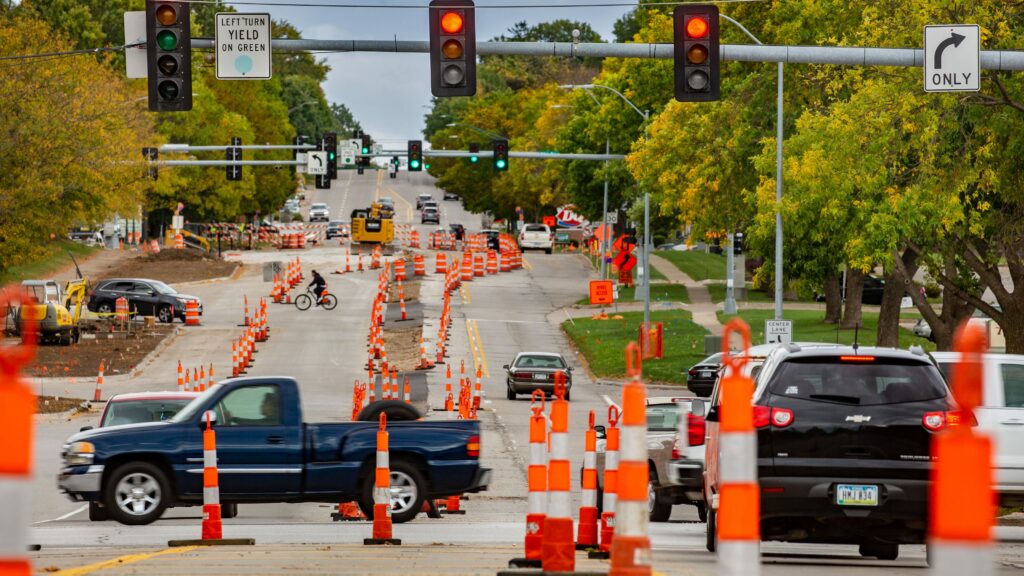
Navigating Construction Zones In Edmonton

Edmonton’s roads are frequently affected by construction, road maintenance, lane closures and changing traffic patterns. Construction zones can create additional hazards for drivers, passengers, pedestrians and road workers. Knowing how to safely navigate a construction zone can help reduce the risk of a serious motor vehicle accident.

Construction zones can involve reduced speed limits, narrowed lanes, lane shifts, uneven pavement, construction equipment, flaggers, temporary traffic signals and changing road conditions. Drivers need to slow down, pay attention to temporary signs and be prepared for conditions to change quickly.

If you are injured in a collision in or around an Edmonton construction zone, determining what happened may require more than simply identifying which vehicle struck another. The circumstances of the road work, traffic controls, signage, road conditions and conduct of the drivers may all become relevant when determining responsibility for an accident.

Why Are Construction Zones More Dangerous?

Construction zones can change the normal driving environment in ways that require motorists to react differently than they would on an ordinary stretch of road.

A construction zone may involve:

  • reduced or changing speed limits;
  • lane closures;
  • narrower travel lanes;
  • temporary lane shifts;
  • uneven pavement;
  • loose gravel or road debris;
  • heavy construction equipment;
  • workers operating near traffic;
  • flaggers directing vehicles;
  • temporary traffic signals;
  • detours;
  • vehicles entering or leaving the construction area; and
  • changes in traffic flow.

Alberta’s Driver’s Guide specifically warns motorists that construction zones can contain hazards such as bumps, fresh oil and loose gravel. Drivers are required to obey the posted construction-zone speed limit even when people and equipment are not actively working.

Slow Down When Entering an Edmonton Construction Zone

One of the most important things a driver can do when approaching a construction zone is reduce speed as required by the posted signs and road conditions.

Do not wait until you are directly beside construction equipment or workers before slowing down. Pay attention to advance warning signs and give yourself enough time and distance to adjust your speed safely.

Alberta’s Driver’s Guide states that construction-zone speed limits must be obeyed at all times, including when workers and equipment are not actively working.

A driver should never assume that a construction-zone speed limit can be ignored simply because the construction site appears quiet.

Construction-Zone Speeding Penalties in Alberta

Alberta treats speeding in construction zones seriously because workers can be exposed to passing traffic and because road conditions may be substantially different from normal driving conditions.

The Alberta Driver’s Guide states that fines are doubled in construction zones when workers are present.

The exact penalty for a speeding offence depends on the circumstances and the amount by which the driver exceeded the applicable speed limit.

Drivers should therefore pay close attention to temporary speed-limit signs, construction-zone signage and any directions provided by traffic-control personnel.

Pay Attention to Construction-Zone Signs

Temporary traffic signs provide important information about what a driver should expect ahead.

Depending on the construction project, motorists may encounter signs warning about:

  • road construction;
  • lane reductions;
  • uneven pavement;
  • workers;
  • flaggers;
  • detours;
  • temporary speed limits;
  • lane shifts;
  • road closures; and
  • changes to traffic patterns.

Alberta’s traffic-accommodation guidance emphasizes that temporary signing should provide motorists with sufficient information to safely navigate changes in the work zone.

Follow the Instructions of a Flag Person

Construction zones may use flaggers or other traffic-control personnel to direct vehicles through areas where ordinary traffic patterns have been interrupted.

Drivers should follow the directions provided by a flag person and be prepared to stop when instructed.

Do not attempt to drive around a traffic-control person simply because you believe the road ahead is clear.

Alberta’s Driver’s Guide specifically advises motorists to obey a flag person’s signal and be prepared to slow down or stop when required.

Leave More Space Between Vehicles

Construction zones can require sudden braking or changes in direction.

Following another vehicle too closely reduces the amount of time available to react if traffic suddenly slows, a lane closes or construction equipment enters the roadway.

Leaving additional space between your vehicle and the vehicle ahead can give you more time to respond to unexpected conditions.

Be Prepared for Uneven Pavement and Loose Material

Road construction can temporarily change the surface of the roadway.

Drivers may encounter uneven pavement, gravel, temporary surfaces, pavement transitions or other changes that are not present on a completed roadway.

These conditions can affect braking, steering and vehicle stability. Reduce speed as appropriate for the posted limit and actual road conditions, maintain control of your vehicle and avoid sudden manoeuvres.

Alberta’s Driver’s Guide specifically identifies bumps and loose gravel among the hazards that may be present in construction zones.

Watch for Construction Workers and Equipment

Construction workers may be operating close to moving traffic, particularly where road lanes have been narrowed or shifted.

Construction equipment may also enter or leave a work area and may move much more slowly than ordinary traffic.

Drivers should remain alert for workers, flaggers, trucks, loaders, graders and other construction equipment.

Alberta’s occupational health and safety rules recognize vehicle traffic as a potential hazard to workers at worksites and require appropriate traffic controls where vehicle traffic creates a danger to workers.

Do Not Drive Distracted Through a Construction Zone

Construction zones require greater attention because traffic conditions can change quickly.

Drivers should avoid distractions such as:

  • using a handheld mobile phone;
  • texting;
  • adjusting navigation while driving;
  • eating or drinking;
  • looking away from the road for extended periods; and
  • any other activity that takes attention away from driving.

A driver who is already dealing with narrowed lanes, temporary signs and changing traffic patterns has less room for error than a driver travelling on an ordinary roadway.

Check Edmonton Road Construction Before You Drive

When possible, drivers can check road and construction information before beginning a trip.

Alberta’s 511 Alberta provides current information about construction, incidents, road conditions, closures and other travel information.

Checking the route before leaving can help you anticipate delays and, where appropriate, choose an alternative route rather than making last-second decisions while driving.

What If You Are Injured in an Edmonton Construction-Zone Accident?

Most construction-zone accidents are still motor vehicle accidents, but the presence of a construction project can introduce additional facts that may need to be investigated.

For example, an investigation may need to consider:

  • the posted speed limit;
  • temporary traffic signs;
  • lane markings;
  • traffic-control devices;
  • flagger instructions;
  • road surface conditions;
  • construction equipment;
  • the actions of the drivers involved;
  • witness evidence;
  • photographs and video;
  • dashcam footage;
  • surveillance footage; and
  • the layout and condition of the construction zone at the time of the collision.

The fact that a collision occurred in a construction zone does not, by itself, establish who is legally responsible. Liability depends on the facts and the applicable law.

Could a Construction Company Be Responsible for a Collision?

Potentially, but this is highly fact-specific.

A construction company, contractor, municipality or another party could potentially become relevant to an accident investigation depending on what happened at the site and what legal duties applied.

However, a construction company is not automatically responsible simply because a collision occurred in an area where construction was taking place.

Establishing liability may require evidence concerning the design and implementation of traffic controls, warnings, road conditions, construction activities and the conduct of the people involved.

A lawyer assessing such a claim would need to examine the specific circumstances rather than assume liability based solely on the location of the collision.

What Evidence Should You Preserve After a Construction-Zone Accident?

Evidence can become particularly important when a collision occurs in a changing construction environment.

If you are physically able to do so and it is safe, consider documenting:

  • the vehicles involved;
  • the damage to each vehicle;
  • the roadway;
  • construction-zone signs;
  • temporary speed-limit signs;
  • lane markings;
  • barriers and traffic-control devices;
  • road surface conditions;
  • construction equipment;
  • the surrounding intersection or roadway;
  • weather and visibility conditions;
  • names and contact information for witnesses;
  • police information or the collision report number; and
  • any video captured by dashcams or other cameras.

Construction conditions can change quickly. Photographs taken shortly after an accident may therefore provide useful evidence of what the roadway and traffic controls looked like at the time of the collision.

What If the Construction Zone Was Poorly Marked?

If you believe inadequate signage, confusing traffic controls or another construction-zone condition contributed to an accident, document what you observed and preserve any available evidence.

Alberta’s traffic-accommodation guidance recognizes that temporary signing and traffic controls need to account for factors such as visibility, traffic speed, the location of the work area and changes to the work zone.

Whether a particular construction-zone setup was legally inadequate is a separate question that depends on the applicable requirements and the facts of the accident.

What Should I Do After an Edmonton Construction-Zone Collision?

  1. Prioritize safety.
    Move to a safe location if you can do so without creating additional danger.
  2. Call emergency services when necessary.
    Serious injuries, dangerous road conditions or other emergencies may require immediate assistance.
  3. Obtain medical attention.
    Some injuries may not be immediately apparent after a collision.
  4. Exchange information.
    Obtain the required information from the other drivers involved.
  5. Document the scene.
    If it is safe, photograph the vehicles, roadway, signs, construction equipment and surrounding conditions.
  6. Identify witnesses.
    Obtain contact information from people who witnessed the collision.
  7. Report the collision as required.
    Follow Alberta’s collision-reporting requirements and the instructions of police or emergency personnel.
  8. Notify your insurer.
    Follow the applicable insurance reporting requirements.
  9. Keep your records.
    Preserve medical records, receipts, photographs, employment information and insurance correspondence.
  10. Obtain legal advice when appropriate.
    If you have suffered significant injuries or there is uncertainty about liability or insurance coverage, consider speaking with an Alberta personal injury lawyer.

Common Construction-Zone Accident Scenarios

Rear-end collision in a construction zone

Traffic may slow suddenly when lanes merge or construction activity changes the normal flow of traffic. A driver following too closely may not have sufficient time to stop.

Collision during a lane merge

Lane reductions can create conflicts when vehicles move into the same lane. Drivers should follow the posted signs and lane markings and allow other motorists sufficient space to merge safely.

Collision with construction equipment

Construction equipment may enter or leave a work area or operate close to moving traffic. Drivers should remain alert and follow all temporary traffic controls.

Collision involving a construction-zone traffic controller

Flaggers and other traffic-control personnel may direct vehicles through a construction area. Drivers should follow their signals and be prepared to stop.

Collision caused by changing road conditions

Uneven pavement, gravel and other temporary road conditions can affect vehicle handling. Drivers should adjust their driving to the conditions while remaining within the posted speed limit.

Frequently Asked Questions About Edmonton Construction Zones

Is the speed limit in an Alberta construction zone always reduced?

Not necessarily. Drivers must obey the speed limit that is posted for the particular roadway and construction zone. Alberta’s traffic-accommodation guidance provides for reduced speeds where road work changes conditions, creates obstructions or requires workers or equipment to be near the normal path of travel.

Do I have to obey a construction-zone speed limit when workers are not present?

Yes. Alberta’s Driver’s Guide states that construction-zone speed limits must be obeyed at all times, even when people and equipment are not working.

Are speeding fines doubled in Alberta construction zones?

Alberta’s Driver’s Guide states that fines are doubled when workers are present in construction zones. The specific penalty depends on the offence and circumstances.

What should I do if I am injured in a construction-zone accident in Edmonton?

Seek appropriate medical attention, report the collision as required, document the accident scene when safe to do so, preserve evidence and notify the applicable insurer. If you suffered significant injuries or liability is disputed, consider obtaining legal advice from an Alberta personal injury lawyer.

Can I make a personal injury claim after a construction-zone accident?

Potentially. A construction-zone accident is still a motor vehicle collision, and the availability of a personal injury claim depends on the applicable Alberta law, the date of the accident, the nature of the injuries and the circumstances that caused the collision.

Can I sue a construction company if its construction zone caused my accident?

Potentially, but not simply because an accident occurred in a construction zone. Liability depends on the facts, the applicable legal duties and whether the evidence establishes that the construction company or another party was legally responsible for the accident.

Where can I find current Edmonton construction and road information?

511 Alberta provides current information about construction, road conditions, incidents, closures and other travel information. Visit

511 Alberta

before travelling when you want to check current road conditions.

Official Alberta Road-Safety Resources

Legal Review


Reviewed by

Chady F. Moustarah

Chady F. Moustarah is a lawyer and founding partner of Moustarah & Company in Edmonton, Alberta. His practice includes personal injury litigation and motor vehicle accident claims.

This article was reviewed and updated to provide current general information about construction-zone safety, Alberta road rules and personal injury considerations following a construction-zone motor vehicle accident.

Review date:
August 15, 2026

About Moustarah & Company

Moustarah & Company is an Edmonton law firm representing people who have suffered personal injuries in motor vehicle collisions and other circumstances.

The firm serves clients in Edmonton and throughout Alberta.


Meet the Lawyers at Moustarah & Company

Injured in an Edmonton Construction-Zone Accident?

If you were injured in a motor vehicle collision in or around a construction zone, you may have questions about insurance coverage, responsibility for the accident and your legal rights.

Moustarah & Company provides personal injury legal services in Edmonton and throughout Alberta.


Contact Moustarah & Company for a Free Consultation